A Threshold Between Eras in the Heart of Arizona
Stepping onto the grounds of Fort Verde State Historic Park feels less like visiting a museum and more like walking through a quiet tear in the fabric of time. While many travelers rush past the town of Camp Verde on their way to the red rocks of Sedona or the cool pines of Flagstaff, those who take the exit find themselves standing on the most well-preserved site of the Indian Wars-era in the entire state of Arizona. The air here carries a different weight than it does in the bustling modern cities nearby. It smells of sun-baked wood, high-desert sage, and the lingering stillness of a place that has witnessed the radical transformation of the American West.
Fort Verde serves as a physical anchor for the history of the Verde Valley, acting as a silent witness to the complex and often turbulent relationship between the United States military, the arriving settlers, and the Indigenous people who called this land home long before the first wooden shingle was ever split. Visitors do not just look at artifacts behind glass; they walk across the same porch floorboards that officers paced a century and a half ago. This park offers an immersive experience that challenges the imagination to reconstruct the sounds of bugles, the clatter of horse hooves, and the domestic hum of a remote military outpost in the late nineteenth century.
The Strategic Foundation of the Verde Valley
The story of Fort Verde began not with a desire for a permanent settlement, but with a desperate need for protection in a landscape defined by conflict. In the 1860s and 1870s, as miners and farmers moved into the fertile basin of the Verde River, tensions with the local Tonto Apache and Yavapai tribes escalated rapidly. The United States government established a series of temporary camps to guard these new settlers, eventually settling on the current location in 1871. This was not a fortress in the medieval sense, with high stone walls and turrets, but rather an open square designed for mobility and functionality.
The military renamed the site Fort Verde in 1879, signaling its importance as a primary base of operations for General George Crook’s scouts and soldiers. The layout follows a traditional military “parade ground” structure, where buildings face inward toward a central field. This design allowed for rapid communication and assembly, which was vital during an era when the surrounding wilderness remained unpredictable. Today, as you stand in the center of that wide, grassy parade ground, you can see how the architecture reflects a rigid sense of order imposed upon a rugged, untamed environment. The symmetry of the buildings provides a striking contrast to the jagged mountains that rim the valley, illustrating the Army’s attempt to bring a sense of “civilized” structure to the frontier.
Life Inside the Officer’s Row
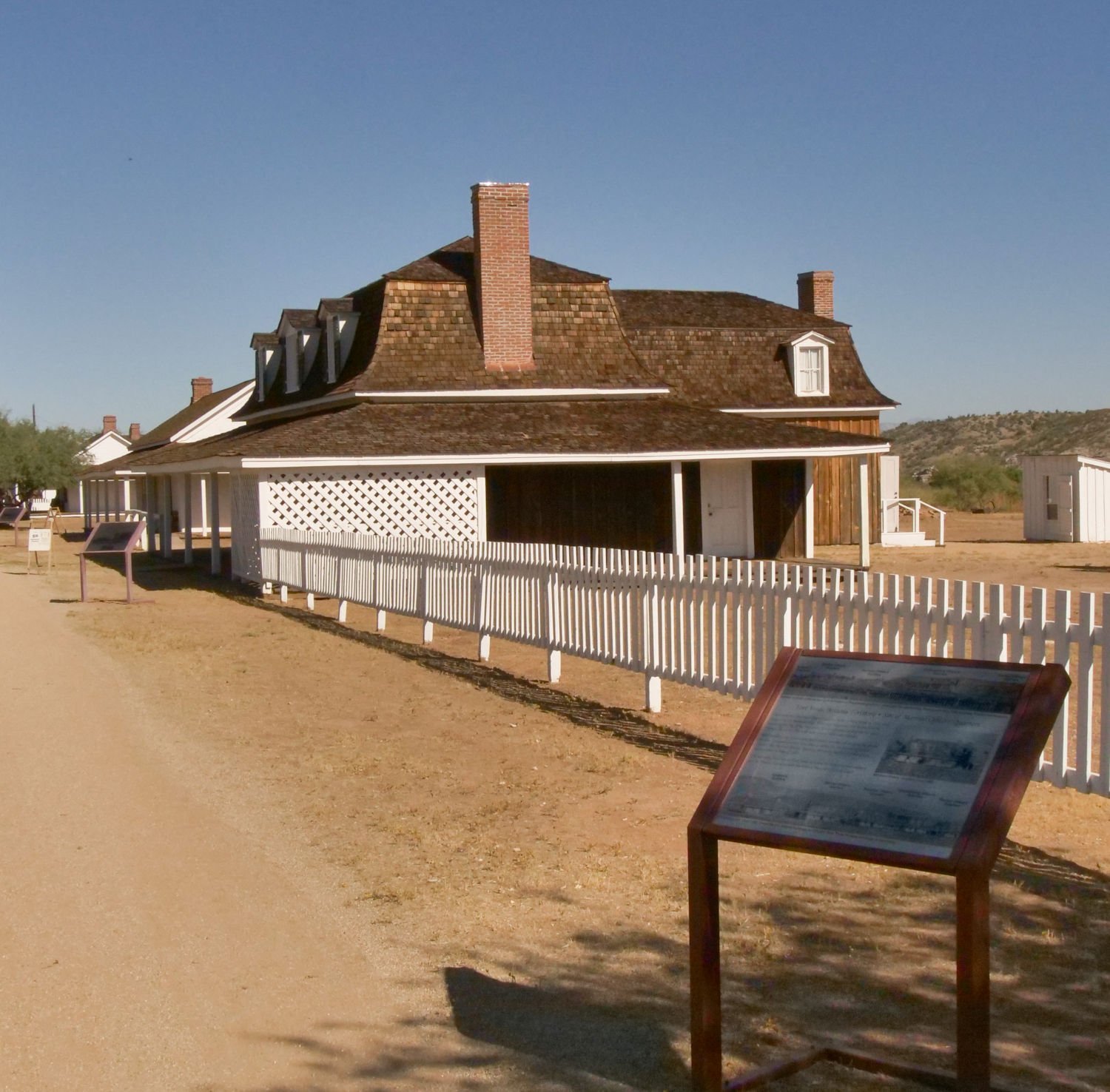
Perhaps the most captivating aspect of Fort Verde is the trio of original buildings known as Officer’s Row. Unlike many historic sites where the structures are modern recreations, these are the actual homes where commanders and their families lived during the fort’s peak years. Walking into the Commanding Officer’s Quarters is a jarringly intimate experience. The rooms are staged with period-accurate furniture, much of it original to the era, providing a glimpse into the domestic side of military life. You see the heavy Victorian sofas, the delicate china sets, and the lace curtains that officers’ wives brought with them in an attempt to maintain a sense of Eastern refinement in the middle of a dusty desert outpost.
The presence of these family comforts reminds us that the fort was not just a place of war, but a community. Women and children lived here, navigating the challenges of extreme heat, isolation, and the constant threat of illness. The contrast between the harsh military missions conducted in the field and the genteel living rooms of Officer’s Row highlights the psychological duality of the frontier. While the men were away on long patrols through the Mogollon Rim, their families worked to create a semblance of “home” within the confines of the military square. These buildings preserve the whispers of those private lives, from the books left on bedside tables to the wood-burning stoves that once heated morning coffee.
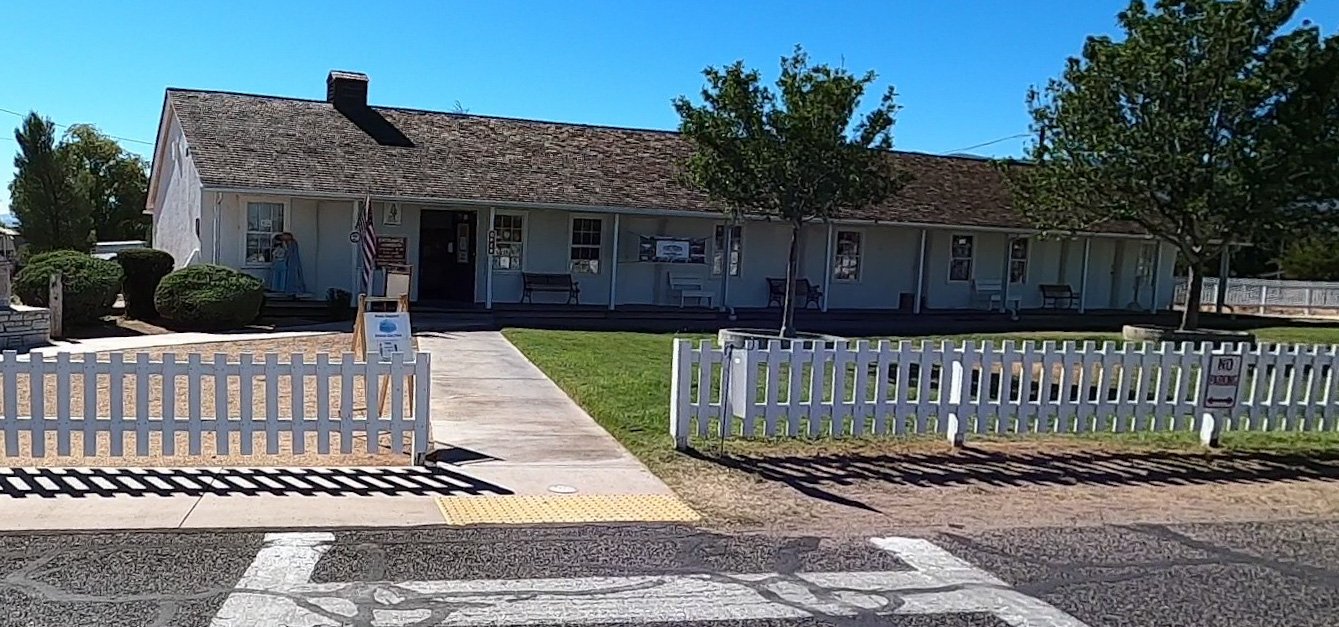
Administration Building
The Logistics of a Frontier Outpost
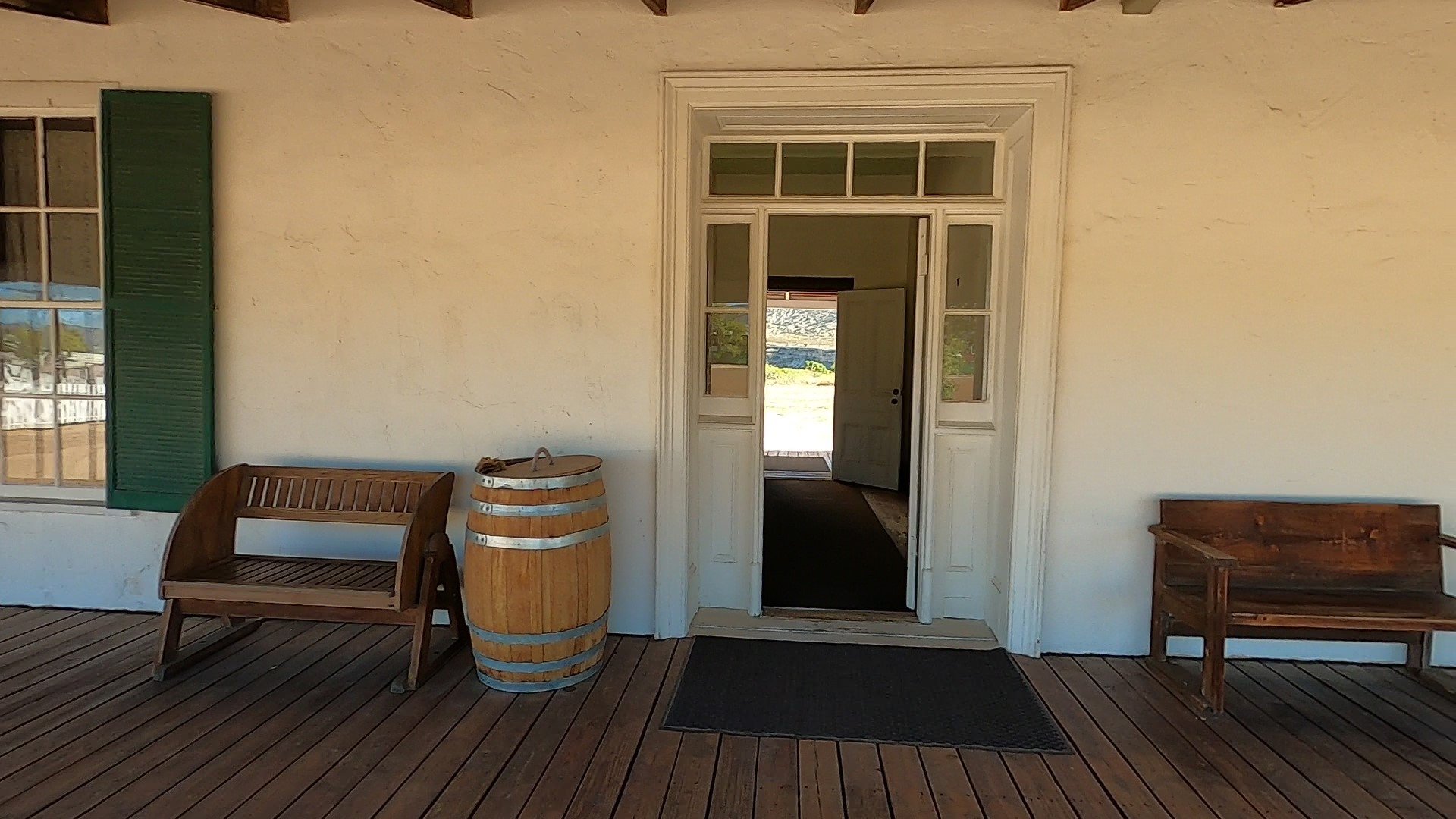
Beyond the elegance of the commander’s home lies the practical reality of the Doctor’s Quarters and the Bachelor Officers’ Quarters. These structures reveal the logistical backbone of the fort. In the Doctor’s Quarters, the display of nineteenth-century medical tools offers a sobering look at the reality of frontier medicine. Without modern antibiotics or sophisticated surgical suites, the post surgeon dealt with everything from malaria and dysentery to wounds sustained in skirmishes. The small, sterile-feeling rooms serve as a reminder that survival in the 1870s was a daily labor.
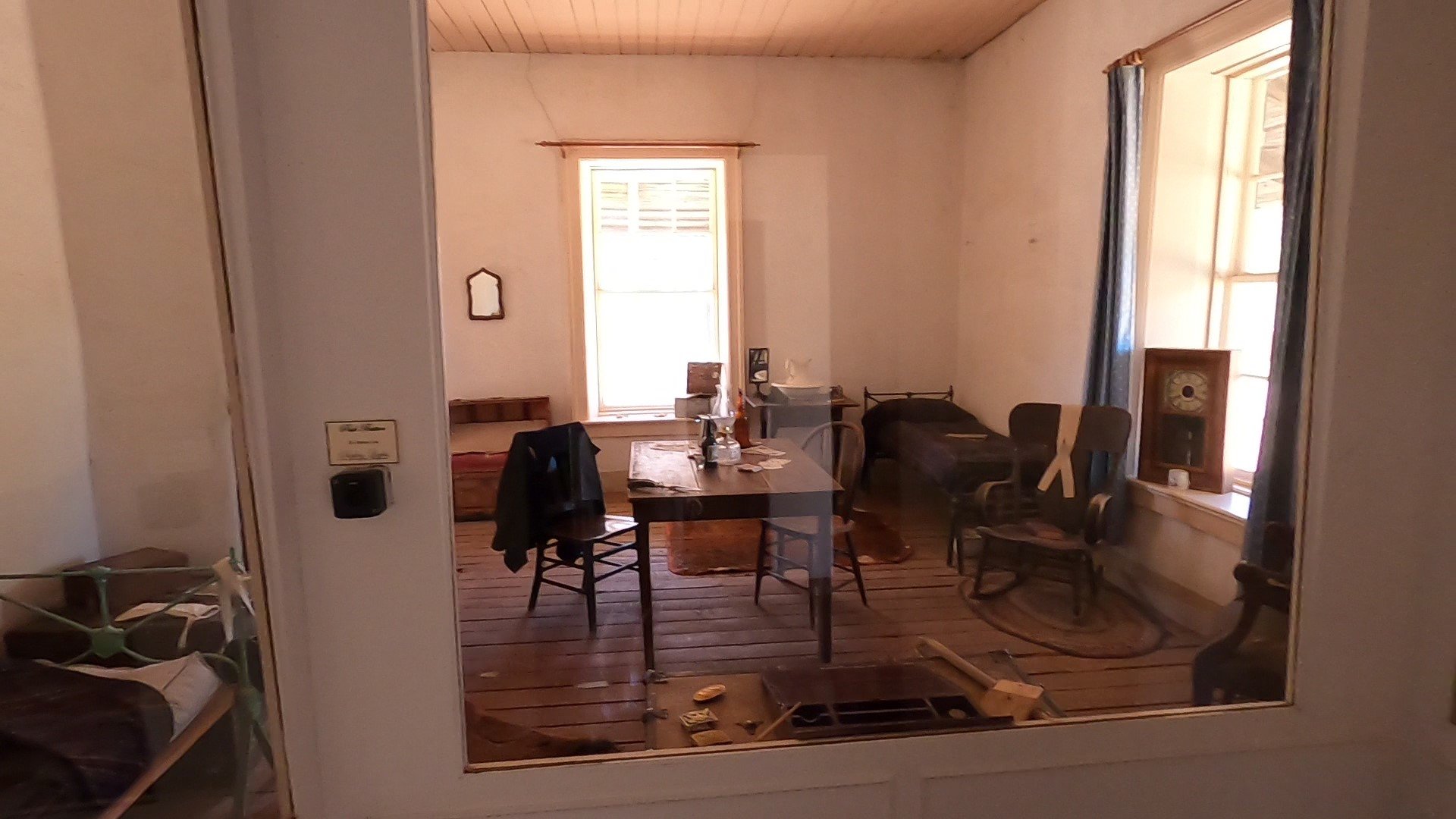
The Bachelor Officers’ Quarters, by contrast, feel more utilitarian and communal. Here, young men fresh from West Point or from the battlefields of the Civil War shared living spaces while they waited for their next assignment. The simplicity of these rooms underscores the transient nature of military service. These men were often hundreds of miles away from their families, relying on one another for companionship in an environment that could be deeply lonely. Seeing their narrow beds and simple washbasins makes the history of the Indian Wars feel less like a dry textbook entry and more like a human narrative of endurance and brotherhood.
Commanding Officer Quarters
The Evolution of the Verde Valley Community
When the military finally abandoned Fort Verde in 1891, the site did not fall into ruin. Instead, it evolved along with the town of Camp Verde. Local citizens recognized the value of the buildings and repurposed them for various civic needs. Some became private residences, while others served as community gathering points. This transition is a vital part of the park’s story because it demonstrates how the fort transitioned from a symbol of military power to the heart of a civilian town. The preservation efforts that began in the mid-twentieth century were driven by a local desire to honor the roots of the community.
Today, the museum housed in the old Administration Building provides a broader context for the artifacts found on-site. It features a collection of military uniforms, weaponry, and everyday tools used by the soldiers. However, it also honors the Indigenous perspective, showcasing items from the Yavapai and Apache people. Understanding the fort requires acknowledging the displacement of these tribes, and the museum makes an effort to present a balanced view of the era. By looking at the intricately woven baskets alongside the cavalry sabers, visitors gain a more holistic understanding of the cultural collisions that defined the American Southwest.
Bachelor Officer Quarters
Planning Your Visit to the Past
Visiting Fort Verde State Historic Park is an accessible adventure for families, history buffs, and casual travelers alike. The park is located just a few miles off Interstate 17, making it an easy detour or a dedicated day trip. Because much of the experience involves walking between the historic buildings and exploring the outdoor parade grounds, the spring and fall months offer the most comfortable temperatures. However, even in the heat of summer, the thick walls of the historic homes provide a surprisingly cool reprieve, demonstrating the efficiency of nineteenth-century construction techniques.
The park often hosts living history events where reenactors bring the 1870s to life with vintage uniforms, black-powder demonstrations, and period crafts. These events add a layer of sensory richness to the visit, allowing children to see the smoke from a rifle or hear the specific cadence of a military drill. Even on a quiet weekday, the park offers a peaceful atmosphere for reflection. There are picnic tables available under the shade of large trees, allowing you to linger and soak in the scenery before returning to the fast-paced modern world.
Doctor and Surgeons Quarters
The Lasting Legacy of the Fort
The true value of Fort Verde State Historic Park lies in its ability to humanize history. It moves beyond the grand political narratives of westward expansion and focuses on the tangible, everyday experiences of the people who lived it. It reminds us that history is not just a series of dates, but a collection of choices made by individuals in difficult circumstances. Whether you are peering into the pantry of a commander’s wife or looking out across the parade ground toward the distant mesas, you are connecting with a pivotal moment in the development of the American identity.
As you leave the park and head back toward the highway, the modern world feels slightly different. You carry with you a better understanding of the grit and resilience required to build a life in the Arizona wilderness. Fort Verde stands as a bridge between the ancient inhabitants of the valley, the soldiers of the nineteenth century, and the residents of today. It is a place of memory, a place of learning, and above all, a place that reminds us how far we have come while honoring the foundations upon which the state was built.
 Check out: Finally Visited The Montezuma Castle National Monument
Fort Verde State Historic Park
125 E. Hollaman St.
Camp Verde, AZ 86322
Park and Facility Hours
10:00 AM – 4:00 PM Daily
Park Entrance Fees
Adult (14+) $7.00
Youth (7-13) $4.00
Child (0-6) Free
