There are places in the American West that stop you in your tracks — not because of a famous skyline or a well-worn tourist trail, but because you’re suddenly standing somewhere that makes 150 million years feel like a Tuesday afternoon. Dinosaur National Monument is one of those places. Straddling the border of northeastern Utah and northwestern Colorado, this 210,000-acre monument delivers a one-two punch of paleontological wonder and dramatic canyon scenery that most travelers don’t even know exists. And for RV travelers, it just happens to be one of the most rewarding and accessible destinations in the entire country.
Whether you’re rolling in with a Class A diesel pusher or a modest pop-up camper, Dinosaur National Monument rewards the road-tripping spirit in ways that few national parks can match. The crowds are manageable, the roads are largely RV-friendly, the campgrounds sit inside stunning landscapes, and the sheer variety of things to see and do will keep you busy for three days or a week. This guide walks you through everything you need to know to make your visit count.
Understanding the Monument’s Two Personalities
One of the first things to understand about Dinosaur National Monument is that it has two very distinct sides, and smart visitors — especially RVers planning their routes — treat them as two separate experiences that happen to share a name and a boundary line.
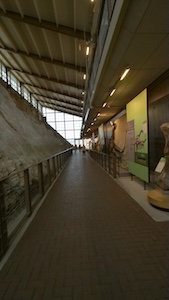
The Utah side, anchored near the town of Vernal, is where the famous fossil quarry lives. This is the paleontology hub, the place where Carnegie Museum excavators discovered over 1,500 dinosaur bones embedded in a tilted rock face back in the early 20th century. The Carnegie Quarry building — now called the Quarry Exhibit Hall — was built directly over the fossil wall, and when you step inside, you’re standing face-to-face with the actual bones of Allosaurus, Stegosaurus, Camarasaurus, and Diplodocus, still embedded in the rock exactly as they were found. It’s a genuinely jaw-dropping experience, and no photo does it justice.
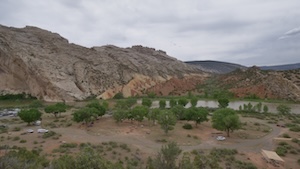
The Colorado side tells a completely different story. Here, the monument transforms into a canyon country masterpiece. The Green River and the Yampa River have carved dramatic gorges through layers of red and tan sandstone, creating a landscape that feels ancient in a completely different way — geologically rather than biologically. The Harpers Corner Road corridor on this side takes you through high desert terrain to one of the most spectacular overlooks in the entire American Southwest.
Most visitors pick one side or the other based on proximity. Smart RV travelers plan a loop that covers both, and that’s the approach this guide recommends.
Getting There and RV Logistics
Dinosaur National Monument sits in a remote corner of the country, and that remoteness is part of its charm. From Salt Lake City, you’re looking at roughly a three-hour drive east on US-40. From Denver, the drive west through the mountains runs about four hours. The nearest towns of any real size are Vernal, Utah (which serves the Utah entrance) and Craig, Colorado (which serves the Colorado entrance). Both towns have fuel, grocery stores, and RV supply shops, so stock up before you head into the monument.
The monument has two main entrance roads, and both are paved and generally passable for RVs up to about 35 feet, though longer rigs should exercise caution on the steeper switchbacks of Harpers Corner Road. The Quarry Visitor Center road on the Utah side is well-maintained and straightforward. One important heads-up: the road that leads directly to the Quarry Exhibit Hall becomes restricted to a shuttle bus during peak season (typically spring through fall). RVers park at the Quarry Visitor Center and hop on the free shuttle for the short ride to the fossil hall, which is a minor inconvenience and a minor blessing — it keeps the parking area from becoming a chaos zone.
Cell service is limited to nonexistent throughout most of the monument, so download the NPS Dinosaur app, grab a paper map at the entrance station, and plan your day before you leave camp. This is not the kind of place where you want to be winging it with Google Maps.
Where to Camp: The Best RV Sites in the Monument
Dinosaur National Monument has several campgrounds, and two of them are genuine standouts for RV travelers. The monument does not have hookup sites — this is dry camping territory — so make sure your tanks and batteries are in good shape before you arrive.
Green River Campground on the Utah side is the most popular, and for good reason. Its 88 sites sit along the bank of the Green River beneath a canopy of cottonwood trees, and the sound of the river at night turns a campsite into something close to paradise. Sites can accommodate rigs up to 35 feet, and the campground has flush toilets and a dump station. Reservations are strongly recommended from spring through early fall and can be made through Recreation.gov.
Echo Park Campground is the monument’s most scenically dramatic option, set at the confluence of the Green and Yampa rivers beneath towering sandstone walls including the famous Steamboat Rock monolith. The catch — and it’s a significant one — is that the road to Echo Park descends a rough dirt switchback that is impassable for most RVs, especially after rain. This one is better suited for tent campers or those in small, high-clearance rigs. If you’re in a larger coach, admire Echo Park from the overlook on Harpers Corner Road and count your blessings that you’re sleeping somewhere with a dump station.
Gates of Lodore Campground on the Colorado side deserves special mention. Tucked at the northern entrance to the monument along the Green River, this remote 17-site campground sits at the base of the dramatic Gates of Lodore canyon — sheer red walls rising straight up from the river. It’s quieter than Green River Campground and equally beautiful. The drive in is paved and manageable for mid-size rigs.
The Must-See Experiences — Don’t Leave Without Doing These
The Quarry Exhibit Hall is the heart and soul of the monument’s identity, and you simply cannot visit Dinosaur National Monument without walking its length. Rangers are on-site and genuinely knowledgeable, and they love talking about the fossils. Plan at least 90 minutes here, more if you have kids or a genuine interest in paleontology. The exhibit hall interpretation goes beyond just pointing at bones — it explains the science of how the animals died, how they were buried, how they fossilized, and what each species’ place in the Jurassic ecosystem looked like. It’s one of the finest interpretive experiences in the entire National Park System.
Harpers Corner Road and the Harpers Corner Trail rank as the second great must-do experience. This 32-mile scenic drive on the Colorado side winds through pinyon-juniper forest and open desert to a trailhead at the road’s end. From there, a two-mile round-trip trail leads to a peninsula of rock jutting out above the canyons of the Green and Yampa Rivers. Standing at the tip of Harpers Corner and looking down into 2,500 feet of canyon is the kind of moment that makes you feel genuinely small in the best possible way. The drive itself passes the Plug Hat Picnic Area and several excellent overlooks with interpretive signs explaining the canyon geology. The road is paved and accessible to most RVs, though those over 35 feet will want to check with rangers about turnaround logistics at the far end.
The Dinosaur Quarry Visitor Center back on the Utah side has excellent exhibits worth your time before or after the fossil hall. The center explains the history of the Carnegie expedition, the monument’s establishment, and the river system that defines the landscape today. Junior Ranger packets are available here for kids, and the staff is consistently helpful.
Scenic driving along the Canyon Overlook area on the Utah side takes you past several pullouts with views down into Split Mountain Gorge, where the Green River cuts directly through an uplifted dome of rock in one of geology’s more counterintuitive party tricks. The Split Mountain campground and day-use area at the bottom offer easy river access and a chance to watch river rafters emerge from the canyon after their trip — a lively scene on summer afternoons.
What to Do Beyond the Car Window
Dinosaur National Monument is not just a drive-through attraction, and the visitors who get the most out of it are the ones who get out of their rigs and engage with the landscape on foot or by water.
Hiking is accessible and varied across the monument. The Sound of Silence Trail near the Quarry Visitor Center is a 3.5-mile loop through the desert landscape that genuinely earns its evocative name — on a weekday morning, you’ll hear nothing but wind and birds for hours. The Desert Voices Nature Trail near the Quarry is a short, interpretive walk that works beautifully as a morning leg-stretcher. The Jones Hole Trail on the Utah side leads 8 miles round-trip into a canyon with a spring-fed stream, Fremont rock art panels, and some of the most lush, surprising terrain in the monument.
Fremont Culture rock art is scattered throughout the monument and represents one of its most underappreciated features. The Cub Creek Road area on the Utah side has several panels of petroglyphs — images pecked into desert varnish by the Fremont people who lived in this region roughly 1,000 years ago. Walking up to a panel of spirals, human figures, bighorn sheep, and abstract designs and knowing that someone stood in that exact spot a millennium ago creates a powerful sense of continuity with the landscape.
River rafting through the Lodore Canyon and the Whitewater Canyon of the Yampa is a legendary multiday experience that draws serious paddlers from across the country. While most RV visitors won’t be towing a raft, several outfitters based in Vernal and Jensen, Utah offer day trips and multiday guided experiences. Even a half-day float on a calmer stretch of the Green River is worth considering as a way to see the canyon walls from water level.
Planning Your Visit: Seasons, Fees, and Practical Tips
Spring and fall are the sweet spots for visiting Dinosaur National Monument. Late April through early June brings wildflowers, comfortable temperatures in the 60s and 70s, and the Green River running full and fast with snowmelt. September and October deliver crisp air, golden cottonwood leaves along the river, and noticeably thinner crowds. Summer works, but temperatures regularly exceed 100 degrees Fahrenheit in the canyon bottoms, and afternoon thunderstorms roll through unpredictably. Winter is possible for the hardy and the well-insulated, and the snow-dusted sandstone is gorgeous, but some roads and facilities close seasonally.
The entrance fee is $25 per vehicle as of recent rates, and the America the Beautiful Annual Pass covers it completely — a strong argument for picking one up if you haven’t already, since it pays for itself after two or three national park visits.
Water is available at the Quarry Visitor Center and Green River Campground. Fill your tanks whenever you have the opportunity, because other areas of the monument have no water available. The monument has no gas stations, no grocery stores, and no restaurants inside its boundaries. Arrive prepared, and treat the monument as the backcountry experience it essentially is.
Wildlife sightings are common and worth watching for. Mule deer appear near the campgrounds in the early morning and evening. Pronghorn antelope roam the open flats on the Colorado side. River otters have been spotted along the Green River, and golden eagles hunt the canyon rims regularly. Raptors of all kinds are particularly abundant — bring binoculars.
Discover Southern Utah’s Beauty: Stay at Henrie’s Hitch N Post RV Resort
A Final Word for the RV Traveler
Dinosaur National Monument rewards patience and curiosity in equal measure. It’s not a place you drive through and check off a list. It’s a place that opens up slowly, the way any complex landscape does — first with the headline experience (the fossils, the canyon overlooks), then with the smaller details that accumulate over two or three days until you find yourself lingering over a cup of camp coffee, watching the morning light inch down the sandstone cliffs above your campsite, reluctant to leave.
Dinosaur National Monument
4545 Hwy 40
Dinosaur, CO 81610
(435) 781-7700
