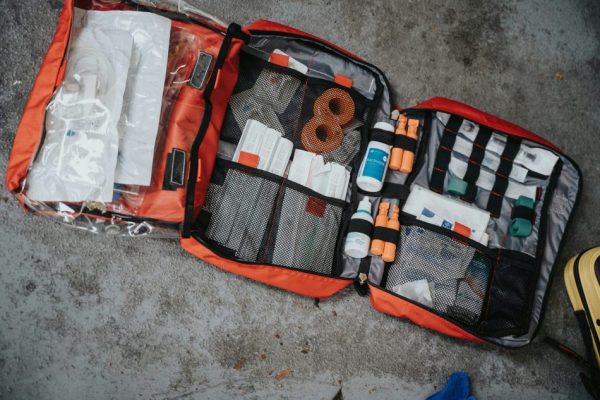
The irresistible allure of RV travel lies in the freedom to roam, to chase the horizon, and to immerse yourself in the great outdoors. As you pilot your home on wheels down remote highways and into secluded boondocking spots, you actively embrace a life of adventure. However, this beautiful freedom comes with an inherent challenge: a significant distance from readily available medical help. This is precisely why equipping your recreational vehicle with a comprehensive RV first aid kit is not merely a suggestion; it represents an essential act of proactive self-reliance.
Think about it: a small cut while preparing dinner at a remote campsite, a sudden, debilitating allergic reaction miles from the nearest pharmacy, or a sprained ankle after an ambitious trail hike. In these moments, you cannot afford to wait. You take immediate control of the situation when you have a well-stocked kit on hand. You stabilize the injury, you manage the pain, and you prevent a minor incident from escalating into a full-blown emergency. A first aid kit is your initial line of defense, empowering you to administer crucial care instantly. It provides peace of mind, transforming that potential panic into decisive action, ensuring your adventure stays on track, and ultimately, protects the well-being of everyone traveling with you. Never underestimate the power of immediate care when an unexpected health crisis unfolds far from the doctor’s office or emergency room.
What to Demand from an RV First Aid Kit
When you make the decision to buy a first aid kit for your RV, you must look beyond the standard, inexpensive box of bandages. You demand a piece of essential safety equipment, not a novelty item. A great RV first aid kit must first feature durability. It needs a rugged, preferably water-resistant or waterproof case, designed to withstand the jostle of road travel and the unpredictable conditions of outdoor life. You require organization—the kit should have clearly labeled, compartmentalized sections. In a high-stress emergency, you cannot waste precious seconds fumbling for a gauze pad; you must locate the right item instantly.
Furthermore, a comprehensive kit for RV use necessitates a wider range of contents than a simple home kit. You must look for supplies that address typical travel and outdoor injuries, including items for trauma care like a quality trauma pad and hemostatic gauze, ample supplies for wound cleaning and closure, and tools such as sharp, reliable trauma shears and splinter forceps. Crucially, the kit must contain a solid assortment of over-the-counter medications: pain relievers, antihistamines for unexpected allergies or insect stings, anti-diarrhea medication, and burn relief ointments. Finally, always check the kit’s capacity. Does it accommodate the size of your traveling group and the length of your trip? And most importantly, does it offer extra space so you can personalize it by adding your own prescription medications, a CPR barrier mask, or a thorough first aid instruction manual? You select a safety solution, not just a box of supplies, and these features make all the difference when seconds count.
Top 5 Essential RV First Aid Kits
We have carefully selected first aid kits. Here are five popular and highly-rated options that consistently deliver for RVers:
1. Surviveware 119 Pcs Comprehensive Premium First Aid Kit
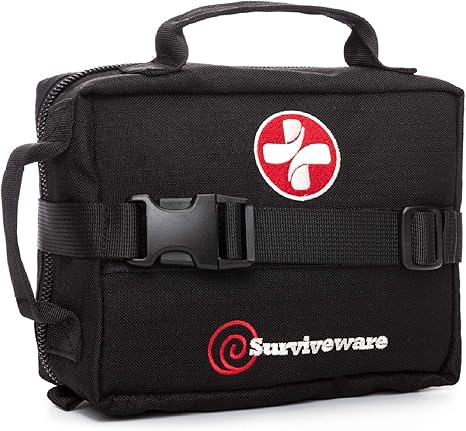
The Surviveware 119 Pcs Comprehensive Premium First Aid Kit is an exceptionally well-suited and highly recommended medical kit for the active RVer. It is not merely a collection of supplies thrown into a bag; it is a meticulously organized and rugged piece of safety gear designed to withstand the unique demands of life on the road and in the wilderness.
The RV-Specific Appeal
The first and most notable feature for an RVer is the kit’s superior organization. The heavy-duty 600D polyester bag opens completely to reveal inner compartments that are clearly labeled by function (e.g., “Bandages,” “Wound Cleaning,” “Trauma”). This system is a lifesaver, especially when adrenaline is high, ensuring you or a family member can grab the correct item without fumbling. For the tight, dynamic storage of an RV, this organization is invaluable.
The exterior case itself is made from a durable, rip-resistant 600D polyester and is water-resistant, protecting the contents from spills, rain, or dust—all common hazards in an RV or at a campsite. The supplies inside are often sealed in laminate pouches for an extra layer of moisture protection.
Key Components and Utility
This 119-piece kit is not just for minor scrapes; it offers a comprehensive range of supplies that address common RV and outdoor injuries. The supplies often include:
- Wound Care Essentials: A generous assortment of adhesive bandages in various sizes, butterfly closures, gauze pads, non-adherent dressings, and antiseptic wipes.
- Trauma Tools: High-quality trauma shears and a pressure bandage for dealing with more significant injuries.
- Unique RV/Outdoor Items: It includes items like sting relief pads, splinter probes, and often a few basic survival items such as a whistle, an emergency blanket, and sometimes a multi-tool or paracord bracelet (depending on the exact model variant).
- Personalization Space: Crucially for RVers, the kit includes extra space or baggies for adding your personal prescription medications, over-the-counter pain relievers, or specialized items like EpiPens or additional burn cream, ensuring it meets your family’s specific medical needs.
- Mounting Versatility: The exterior features a MOLLE-compatible system (straps and loops), which allows you to secure it firmly to a headrest, a wall, or inside a storage compartment, keeping it from shifting during travel while remaining highly accessible.
Pro: Exceptional organization with labeled compartments. Durable, water-resistant bag with a clear organization system for quick access. Includes a mini first aid kit for short excursions.
Con: Considered small for long-term or large group travel. Some users find it slightly pricier than other options.
2. MyMedic MyFAK (My First Aid Kit)
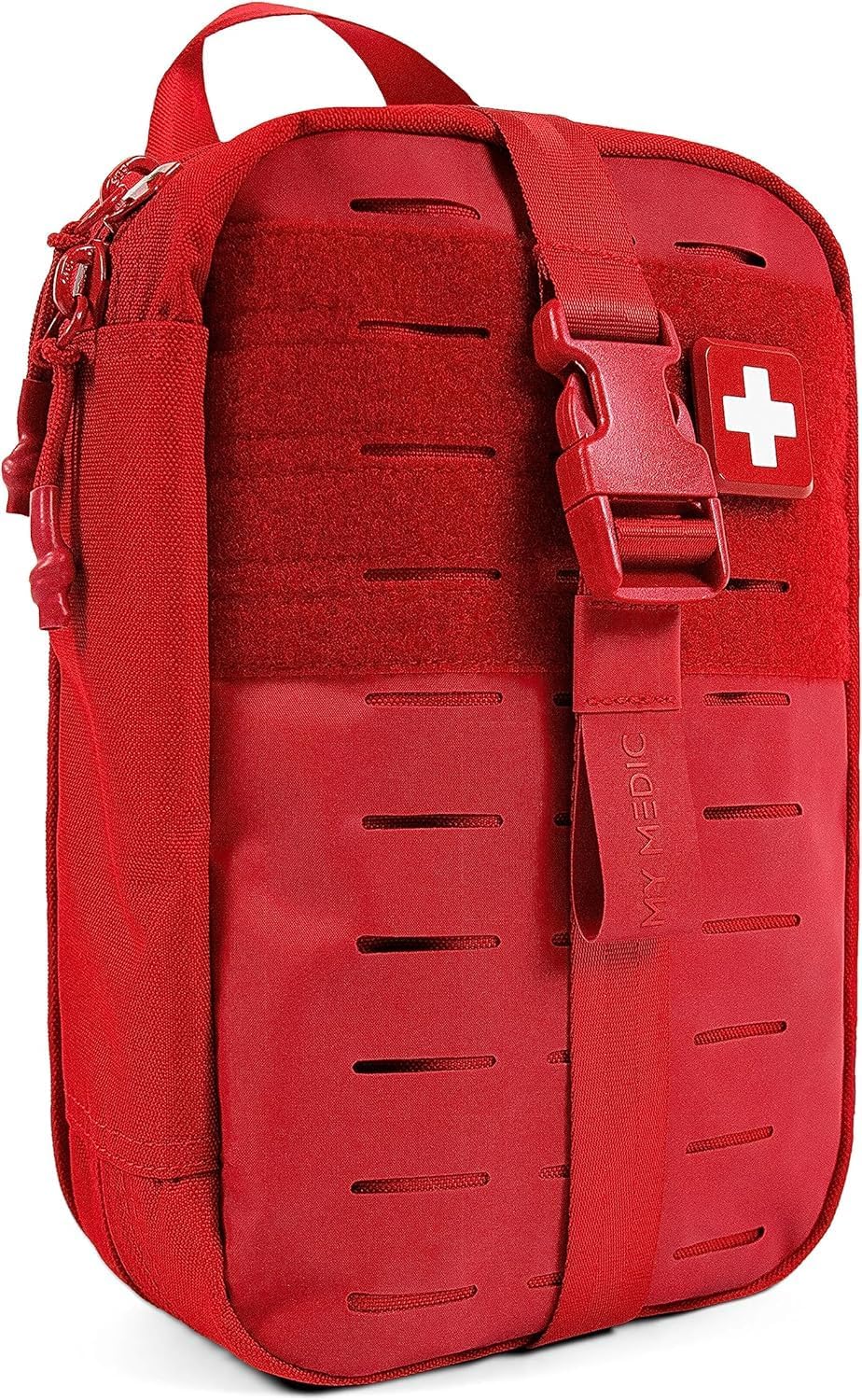
The MyMedic MyFAK (My First Aid Kit) stands out as a high-quality, professional-grade medical kit that is exceptionally well-suited for RV life and the unique challenges of extended travel and remote camping. It moves beyond the basic assortment of bandages and gauze, providing a more robust, trauma-focused system that delivers peace of mind when you are far from emergency services.
Key Features for the RVer
- Trauma-Ready Components: Unlike many standard kits, the MyFAK (especially the “Pro” version) is stocked with supplies capable of handling more severe, life-threatening injuries—a critical necessity when you are boondocking miles from the nearest hospital. This includes items like a RATS or other quality tourniquet, hemostatic agents (to rapidly stop severe bleeding), and chest seals for penetrating injuries.
- Modular Organization (MODs): This is one of the kit’s biggest strengths for RV use. The contents are meticulously organized into color-coded, labeled, and often waterproof inner bags called “MODs” (like a “Bleed MOD,” “Burn MOD,” or “Medication MOD”). This system allows you to quickly grab the exact supplies you need for a specific injury without rifling through the entire kit. In the tight confines of an RV or during a high-stress emergency, this speed is invaluable.
- Rugged and Durable Case: The kit is housed in a tough, often ballistic nylon or Hypalon shell that can withstand the constant jostling, dust, and moisture associated with RV travel and outdoor activities. Its durability ensures your supplies remain protected and viable for years.
- Convenient Mounting and Access: The kit often features a tear-away panel with MOLLE (Modular Lightweight Load-carrying Equipment) webbing. You can securely attach the MyFAK to an RV headrest, a cargo net, or the side of a gear bag, but it allows you to rip the kit off the mounting panel in seconds for rapid deployment.
- Comprehensive Coverage: It contains a mix of advanced trauma supplies and essential everyday items, including a solid selection of over-the-counter medications, wound closure strips, a quality pair of trauma shears, and blister care.
Pro: Superior quality and extensive trauma-focused supplies. Customizable with additional modules for specific needs. Very durable and long-lasting materials.
Con: Higher price point than most consumer kits. Its focus on trauma might include items less relevant to minor scrapes.
3. Adventure Medical Kits Mountain Series Backpacker
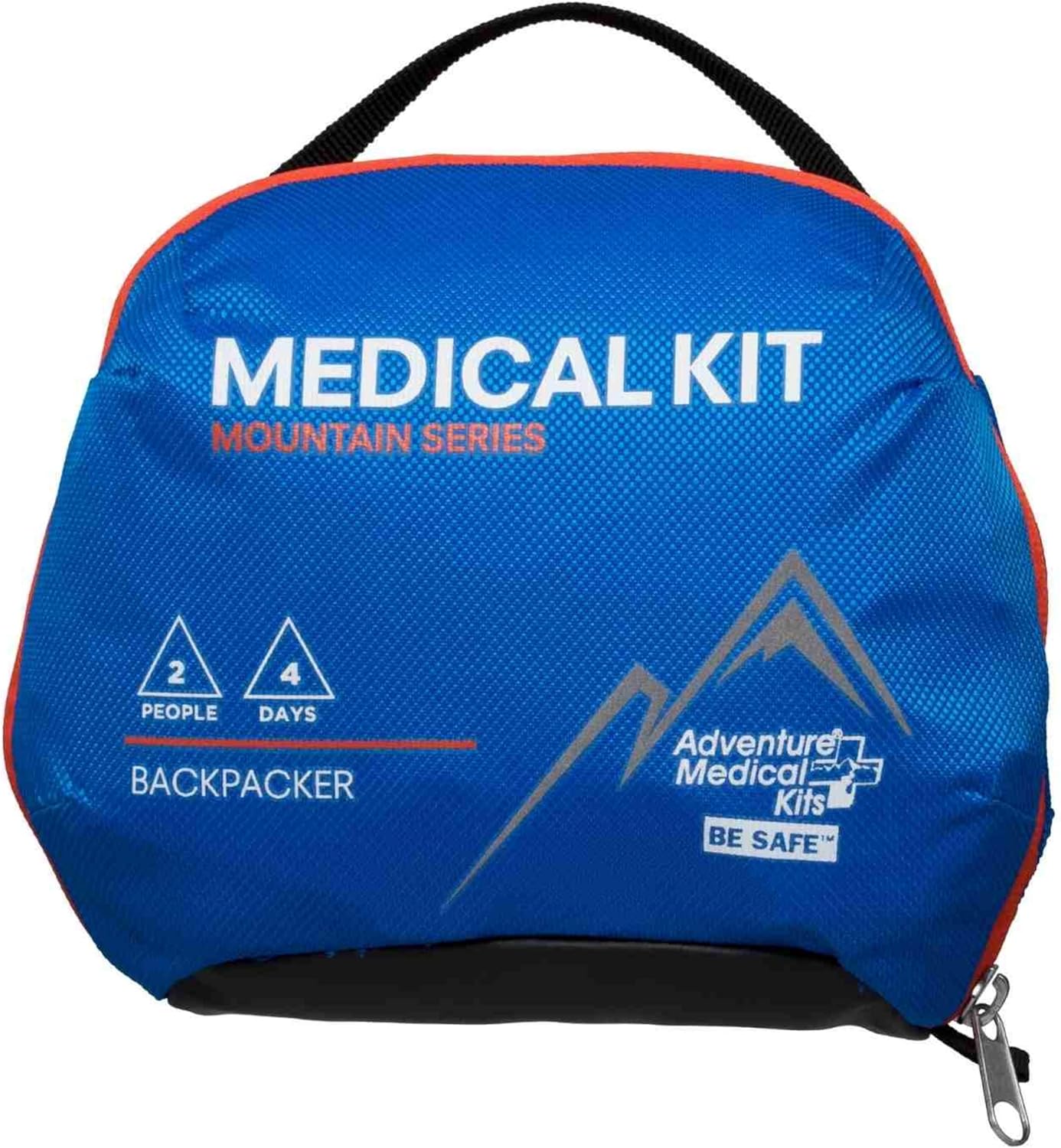
The Adventure Medical Kits Mountain Series Backpacker kit is a highly regarded, mid-sized first aid solution initially engineered for hikers and backpackers who venture into the wilderness for multiple days. For the RVer, this kit translates beautifully from the trail to your travel rig, offering a smart, well-stocked balance between lightweight portability and comprehensive outdoor-focused medical supplies. It serves as an excellent primary first aid kit for two to four people on shorter RV excursions or as a superior “go-bag” for day trips away from your main RV campsite.
Key Features and Benefits for RV Travelers:
- Exceptional Organization: The kit excels in its Easy Care First Aid System. Supplies are neatly divided into internal, semi-transparent, zippered pockets that are clearly labeled by injury type (e.g., “Cuts & Scrapes,” “Medications,” “Stop Bleeding Fast”). This is arguably its biggest asset for an RVer, as it eliminates fumbling and ensures you can locate and deploy the correct item quickly, even in the stress of an emergency.
- Wilderness-Focused Contents: Unlike basic home kits, the Backpacker contains supplies specifically geared toward the common mishaps of an outdoor lifestyle. It includes high-quality tools like EMT shears and splinter/tick remover forceps, ample supplies for blister management (like moleskin), and effective wound closure materials, which are crucial when you are camping or hiking away from civilization.
- Built-in Instruction: A valuable feature is the inclusion of a condensed guide to Wilderness Medicine by Dr. Eric A. Weiss. This manual provides practical, relevant guidance for treating injuries and illnesses when professional medical help is not immediately accessible—a frequent reality for boondockers or those traveling to remote parks.
- Portable and Compact: While it is comprehensive, the kit remains relatively compact and lightweight (typically under a pound). For the RVer, this means it stores easily in a cabinet, under the dinette seat, or, most importantly, is small enough to throw into a backpack when you leave the RV for a day of exploring, hiking, or fishing.
- Comprehensive Medications: It comes stocked with a solid variety of over-the-counter medications to address common ailments on the road, including pain relievers, fever reducers, anti-diarrheal meds, and antihistamines for allergic reactions or insect bites.
Considerations for the RVer:
- Not Fully Waterproof: The Backpacker kit uses durable nylon, which offers water resistance, but it is not entirely waterproof. RVers who frequently encounter heavy rain or store their kit in a potentially damp spot (like a basement storage bay) should consider placing the kit inside a waterproof dry sack or Ziploc bag for added protection.
- Capacity and Duration: This kit is designed for a shorter duration (around four days) for a small group (two people). For extended, months-long RV trips or for large families, you will need to supplement the kit with extra quantities of common items (bandages, gauze) and personal prescription medications.
- Additions Recommended: While well-equipped, RVers often find it beneficial to utilize the extra internal space to add personal essentials like a high-quality SAM splint, a CPR barrier mask, and extra doses of specific personal medications.
Pro: Excellent balance of weight and comprehensive supplies for hiking/camping. Includes a quality wilderness first aid guide. Organized by injury/ailment.
Con: Not entirely waterproof; only water-resistant. Requires customizing to add personal medications.
4. Protect Life First Aid Kit (250-Piece)
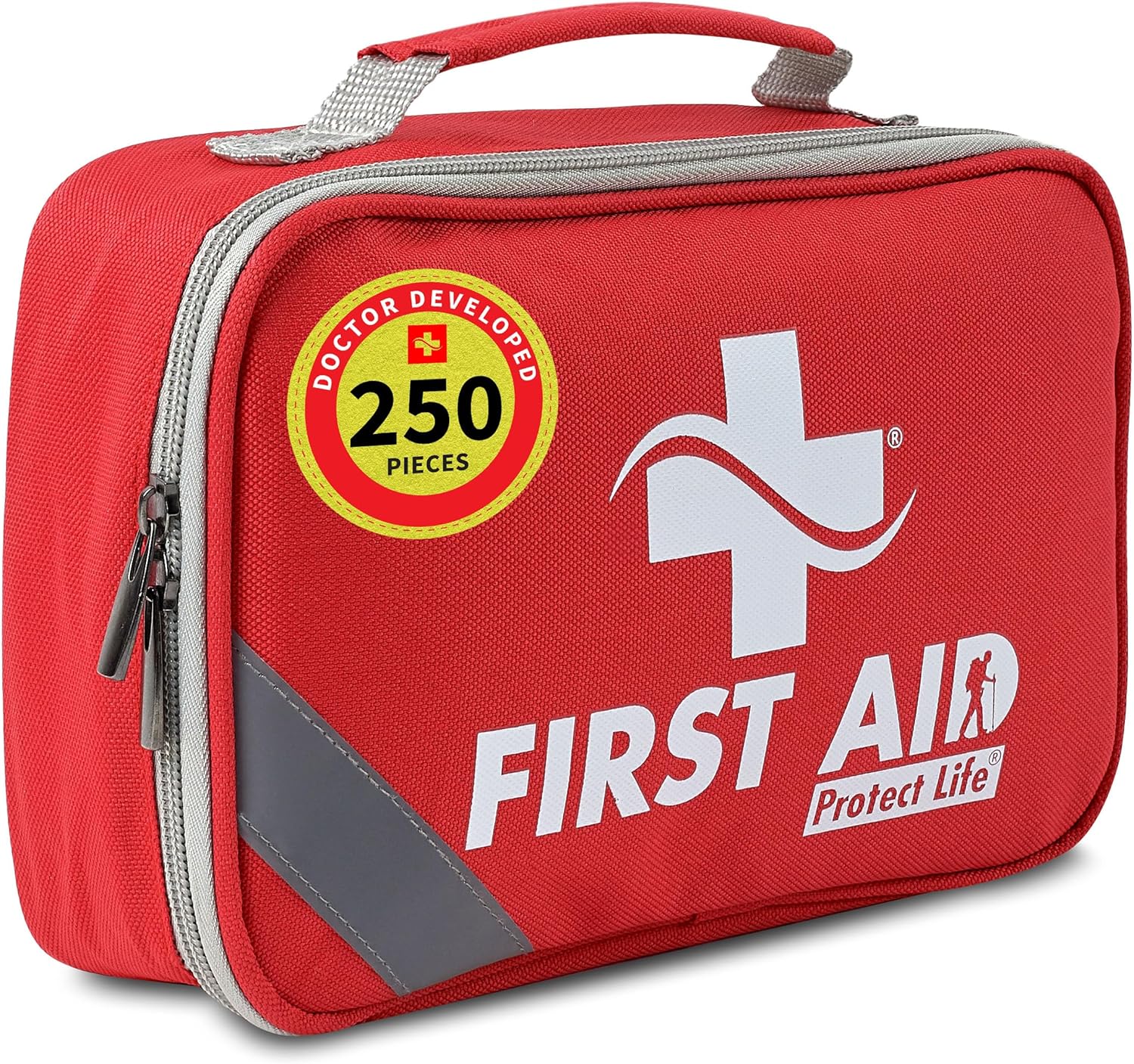
The Protect Life First Aid Kit (250-Piece) offers RV travelers an expansive collection of medical supplies, striking an appealing balance between sheer volume and a budget-friendly price point. This kit is primarily designed to address a wide variety of minor to moderate injuries and common ailments encountered during daily life and outdoor activities like RVing. Contained within a durable, often ripstop fabric bag, this kit provides over 200 essential items, ensuring you have ample quantities of the most frequently used supplies, such as various sizes of adhesive bandages, gauze pads, and antiseptic wipes. It frequently includes valuable emergency extras like an emergency Mylar blanket, a whistle, a disposable instant cold pack, and a CPR mask, making it a capable, all-purpose solution. Its generous piece count makes it an excellent foundation for any RVer, especially those traveling with family, who may need to dip into supplies more frequently.
Key Features and Benefits for RV Travelers
- High Piece Count: With 250 pieces, the kit provides large quantities of common consumables like bandages and cleansing wipes, meaning you won’t quickly run out after a few minor incidents on a long road trip.
- “2-in-1” Design: The kit often features a bonus mini first aid pouch, allowing you to quickly grab a compact subset of essentials (like a few bandages and sting relief pads) for a short hike or day excursion away from the RV.
- Durable and Portable Case: The fabric case (often 600D Polyester Ripstop) is built to handle the rigors of RV storage and travel, and its compact dimensions allow it to be easily stashed in a cabinet, under a seat, or in an exterior storage bay.
- Includes Emergency Tools: Essential non-medical items like a Mylar emergency blanket, a whistle, and a compass are frequently included, adding useful survival capabilities for remote boondocking or unexpected roadside stops.
- Family-Friendly Supplies: The wide variety of bandages (knuckle, fingertip, elbow) and wound-care items is ideal for families with active children, ensuring you are prepared for the most common camping scrapes and bumps.
Considerations for the RVer
- Quality of Tools: While the quantity of medical consumables is high, some of the included tools (like the scissors or tweezers) may be of a more basic, lower quality and an RVer might choose to supplement them with sturdier, higher-grade implements.
- Organization Method: The organization is functional but often less structured or clearly labeled by injury type compared to some premium, higher-priced kits, which may require you to spend a few minutes familiarizing yourself with the layout before an emergency occurs.
- Trauma Focus: This kit focuses heavily on general first aid; RVers engaging in high-risk activities like aggressive mountain biking or remote, deep-wilderness hiking should consider adding dedicated, specialized trauma items (like a tourniquet or higher-grade hemostatic dressings) to supplement its contents.
- Medication Inclusion: Be aware that pre-packaged kits rarely include a comprehensive selection of over-the-counter medications (pain relief, anti-diarrheal, allergy). The RVer should use the kit’s extra space to add their own preferred, full-sized OTC drugs and all necessary personal prescription medications.
Pro: Fantastic value with a high piece count (250 items). Wide variety of bandages, gauze, and basic medicines. Compact enough to store easily in an RV cabinet.
Con: Contents are generally basic quality compared to premium brands. Organization is less structured than the Surviveware or MyMedic kits.
5. Johnson & Johnson All-Purpose First Aid Kit
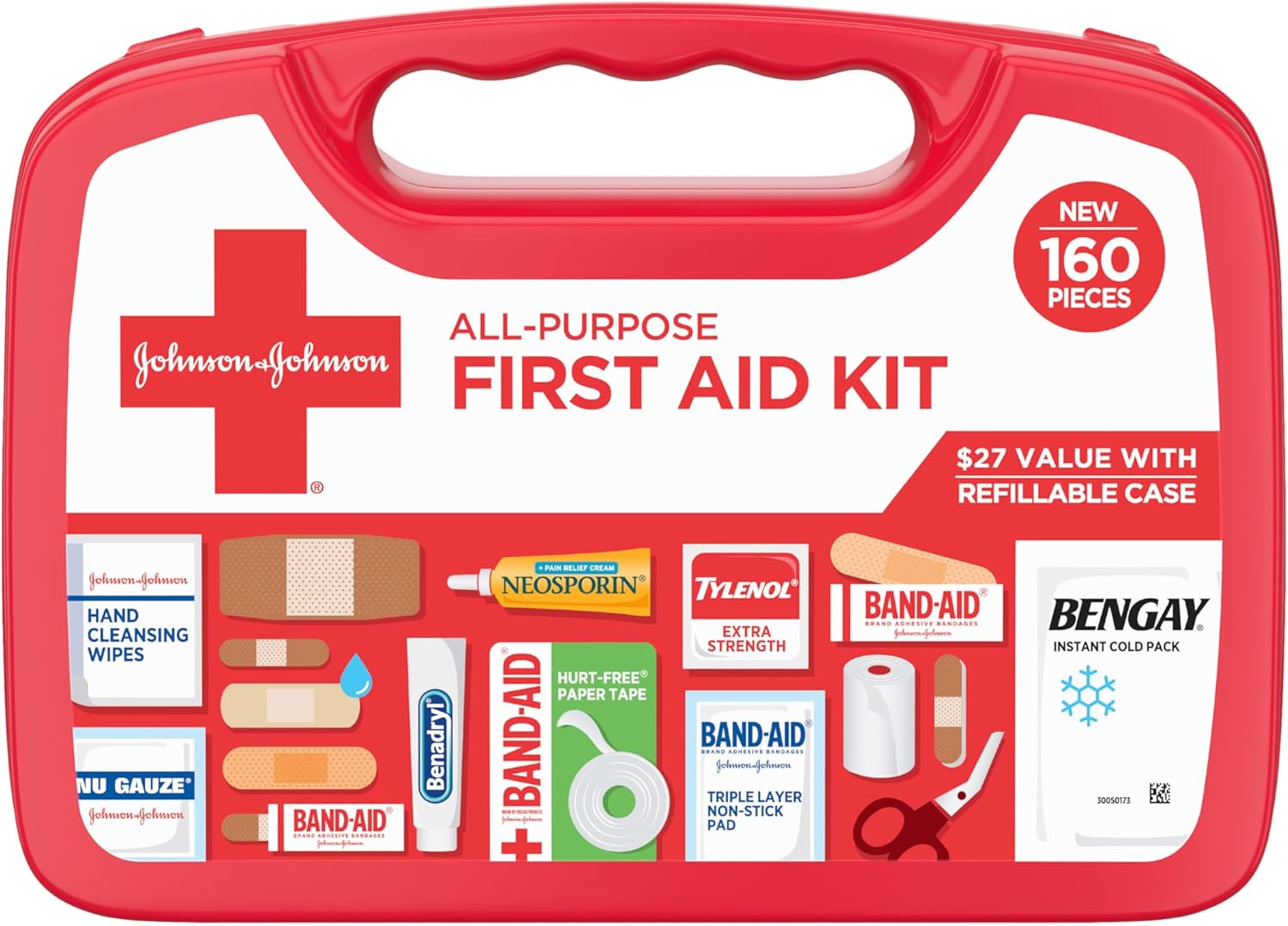
It is generally housed in a durable, organized plastic case which helps keep the contents accessible and contained. The kit is built around the trusted quality of Johnson & Johnson brands, making it a reliable choice for families. It provides the basic essentials for cleaning, treating, and protecting minor wounds, as well as offering relief for common aches, pains, and irritations.
Common contents include:
- Wound Care: A variety of Band-Aid Brand Adhesive Bandages (assorted sizes), sterile gauze pads, cleansing wipes, medical tape, and Neosporin antibiotic ointment.
- Over-the-Counter Medication: Pain relievers like Tylenol (acetaminophen) and sometimes topical itch relief cream (like Benadryl or an equivalent).
- Other Essentials: An instant cold pack, non-stick pads, and a first aid guide are typically included.
Key Features and Benefits for RV Travelers
- Compact and Portable Design: The durable plastic case is conveniently sized to be stored easily in an RV’s cabinet, glove compartment, or small storage bay without taking up valuable space.
- Essential Brand Name Components: Includes trusted and doctor-recommended items from brands like Band-Aid Brand and Neosporin, ensuring quality and familiarity for treating minor injuries.
- Variety of Supplies: The multi-piece kits contain a wide assortment of bandages, gauze, and ointments necessary for the cuts, scrapes, and burns commonly sustained while camping, hiking, or performing RV maintenance.
- Includes Pain and Itch Relief: The addition of over-the-counter pain medication (Tylenol) and topical anti-itch cream is excellent for addressing headaches, minor aches from physical activity, and reaction to insect bites, which are frequent occurrences on the road and at campsites.
- Instant Cold Pack: A non-medicated instant cold pack is included, which is invaluable for quickly treating sprains, strains, or bumps without needing immediate access to a freezer or ice.
- Organization: The structured plastic box helps RVers keep supplies neat and prevents them from rattling or becoming damaged in transit.
Considerations for the RVer
- Expand for Wilderness/Remote Travel: While comprehensive for minor issues, RVers who frequently travel to remote areas, engage in serious hiking, or plan extended stays away from medical services should supplement the kit with supplies for more significant emergencies (e.g., a tourniquet, compression bandages, blister treatment, or specialized meds).
- Temperature Sensitivity: RVs can experience extreme temperature swings. Periodically check and rotate any included medications (e.g., Tylenol, ointments, instant cold pack) to ensure they have not expired or been damaged by heat or freezing temperatures.
- Quantity of Bandages: RV life is active. While the kit has many bandages, active families or long-term travelers may quickly deplete the stock of common sizes and should plan to purchase refills regularly.
- Waterproofing: The standard plastic case may be water-resistant but is often not fully waterproof. Consider storing the kit inside a waterproof dry bag or container if it will be kept in an area prone to moisture or dampness (like an exterior storage bay).
- Specialized Needs: Rvers with specific medical conditions (allergies, diabetes, severe bee sting reactions, etc.) must add their necessary prescription medications and specialized supplies (e.g., EpiPen, glucose tablets) to the kit.
Pro: Contains trusted, brand-name products (Band-Aid, Neosporin). Very affordable and easy to find/replenish. Compact and excellent for quick, basic fixes.
Con: Insufficient for serious injuries or trauma care. Limited on specialized outdoor gear like wraps or shears.
👉 You Might Enjoy This: Top 10 Must-Have Kitchen Gadgets for RV Life
The Final Word on RV First Aid Kits
You have now established the non-negotiable importance of carrying a fully-equipped first aid kit in your RV. The reality of life on the open road involves unexpected challenges, and a well-chosen kit instantly transforms you from a vulnerable traveler into a capable first responder for yourself and your companions. You must choose a kit based on the criteria of durability, superior organization, and comprehensive contents—a kit that is as ready for a sprain on a remote trail as it is for a kitchen burn. By selecting one of the top-rated kits and taking the active step to stock and maintain it, you are not simply checking an item off a list; you are making an investment in your safety, your health, and the ultimate success of your RV adventures. Never leave your driveway without ensuring your essential lifeline is packed and accessible; your peace of mind depends on it.
