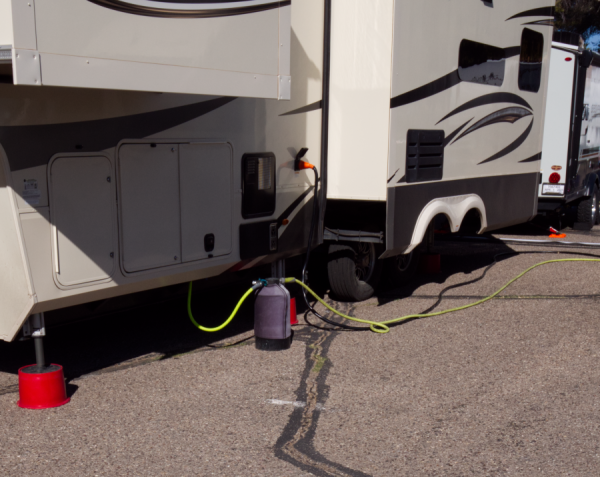
Beyond the Filter: The Ultimate Guide to RV Water Softeners
You’ve got your RV water filter, you’re hooked up to the city water at a beautiful campground, and you’re ready to relax. But something feels off. Your soap won’t lather, your dishes have unsightly spots, and your skin feels dry and itchy after a shower. The culprit? Hard water.
While a standard inline water filter is great for removing sediment, chlorine, and odors, it does nothing to combat the high mineral content found in hard water. That’s where a portable RV water softener becomes a game-changer. These compact, easy-to-use devices can save you from a host of headaches and truly elevate your RVing experience.
Why Hard Water is Your RV’s Worst Enemy
Hard water is defined by its high concentration of dissolved minerals, primarily calcium and magnesium. While generally safe to drink, these minerals wreak havoc on your RV’s systems.
- Damages Plumbing & Appliances: As hard water is heated, the minerals precipitate out and form a hard, crusty buildup called scale. This scale can clog your water lines, reduce the efficiency of your water heater, and damage faucets, shower heads, and even your ice maker. Over time, this can lead to costly repairs and a shorter lifespan for your RV’s essential appliances.
- Bad for Your Body: If you’ve ever felt a “film” on your skin after a shower or noticed how much soap it takes to get a good lather, you’re experiencing the effects of hard water. It can leave your skin feeling dry, your hair looking dull, and can exacerbate skin conditions.
- Ruins Your Cleaning Efforts: Hard water makes it incredibly difficult to get things truly clean. You’ll find yourself using more soap for dishes and laundry, and still ending up with water spots on glassware and a dull residue on surfaces.
How a Portable RV Water Softener Works
An RV water softener uses a process called ion exchange to remove those pesky minerals. Inside the softener’s tank are resin beads that are charged with sodium ions. As hard water flows through the tank, the resin beads attract and “trap” the calcium and magnesium ions, releasing the harmless sodium ions back into the water. The result? Soft, clean water is delivered to your RV’s plumbing.
These units are incredibly simple to use. You simply connect the campground’s water hose to the softener’s inlet and a second hose from the softener’s outlet to your RV’s city water connection. When the resin beads become saturated with minerals (this is called “exhaustion”), you simply perform a regeneration process, which involves flushing the unit with a saltwater solution made from regular table salt. This process “recharges” the resin beads, allowing you to use the softener over and over again for years.
What to Look For in a Water Softener
When shopping for an RV water softener, keep these key features in mind:
- Grain Capacity: This is the most important spec. The “grain” rating (e.g., 8,000, 16,000, 32,000) indicates how much hardness the softener can remove before needing regeneration. A higher grain capacity means you’ll have to regenerate less often, which is more convenient, especially if you’re a full-timer.
- Portability & Size: RV storage space is precious. Look for a unit that is a good balance between capacity and a compact design that fits easily in a storage bay.
- Flow Rate: Make sure the softener can handle a decent flow rate (measured in gallons per minute, GPM) so you don’t experience a significant drop in water pressure when showering or doing dishes.
- Ease of Regeneration: The process of regenerating should be quick and simple. Most models use a large opening on top to pour in table salt.
Top 5 RV Water Softeners
Based on their performance, ease of use, and customer reviews, here are some of the best portable RV water softeners you can find on Amazon.
1. On The Go Portable RV Water Softener (OTG4-DBLSOFT)
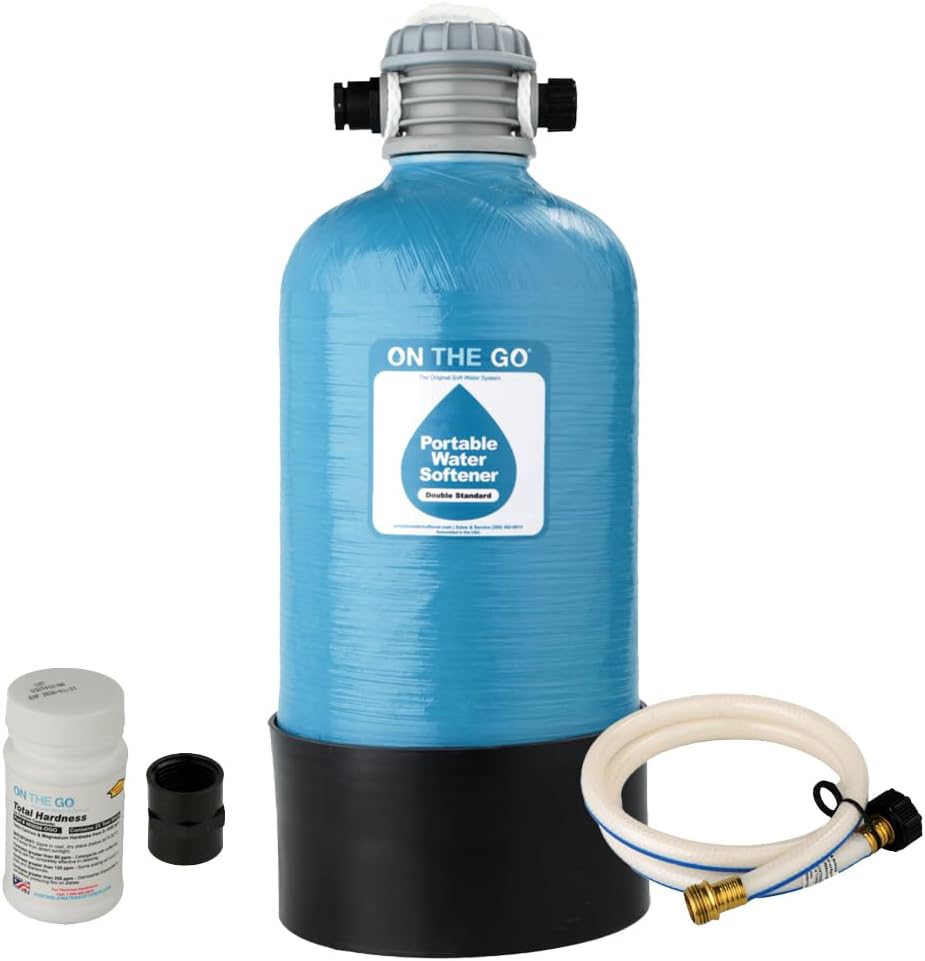
This model is a long-standing favorite in the RV community and for good reason. It boasts a high 16,000-grain capacity, allowing it to soften a substantial amount of water (around 1,600 gallons or 40 days of use) before needing regeneration. Its compact design and built-in handle make it easy to transport.
- Pros: Excellent capacity, very durable, and a proven track record of reliability. The regeneration process is simple and takes less than 30 minutes.
- Cons: It’s one of the pricier options on the market.
2. Pro+Aqua Portable RV Water Softener
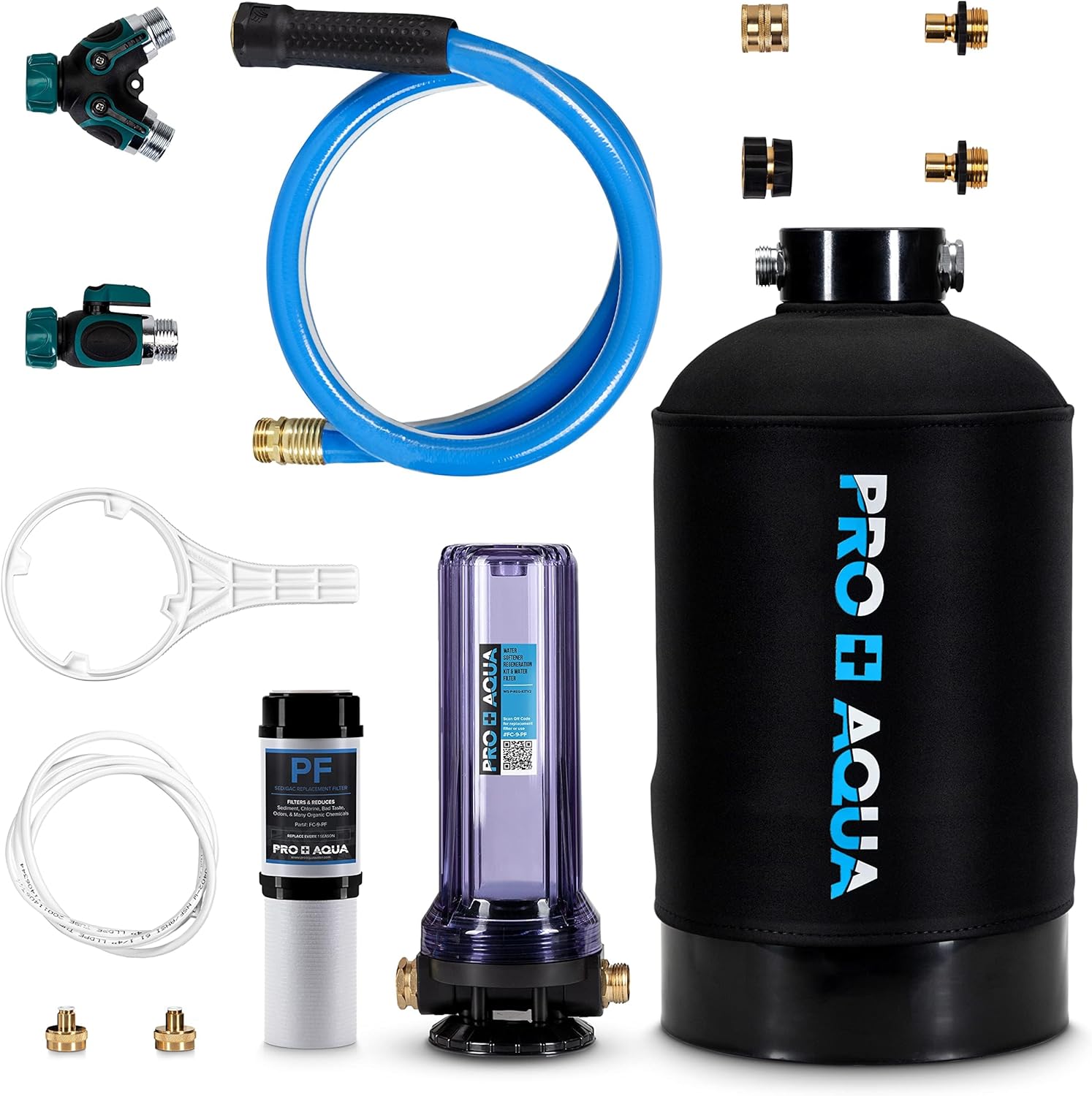
The Pro+Aqua is a strong competitor, often praised for its high performance and user-friendly design. It offers a 16,000-grain capacity and is designed to provide softened water for up to 40 days on a single regeneration. It’s a great choice for those who want a high-quality system with minimal fuss.
- Pros: High capacity, durable construction with a protective base, and easy to use. Many users report excellent results in a variety of water conditions.
- Cons: The price can be on the higher end, similar to the On The Go brand.
3. Watts Water Quality/Condition M7002 Flow-Pur RV-Pro 10,000
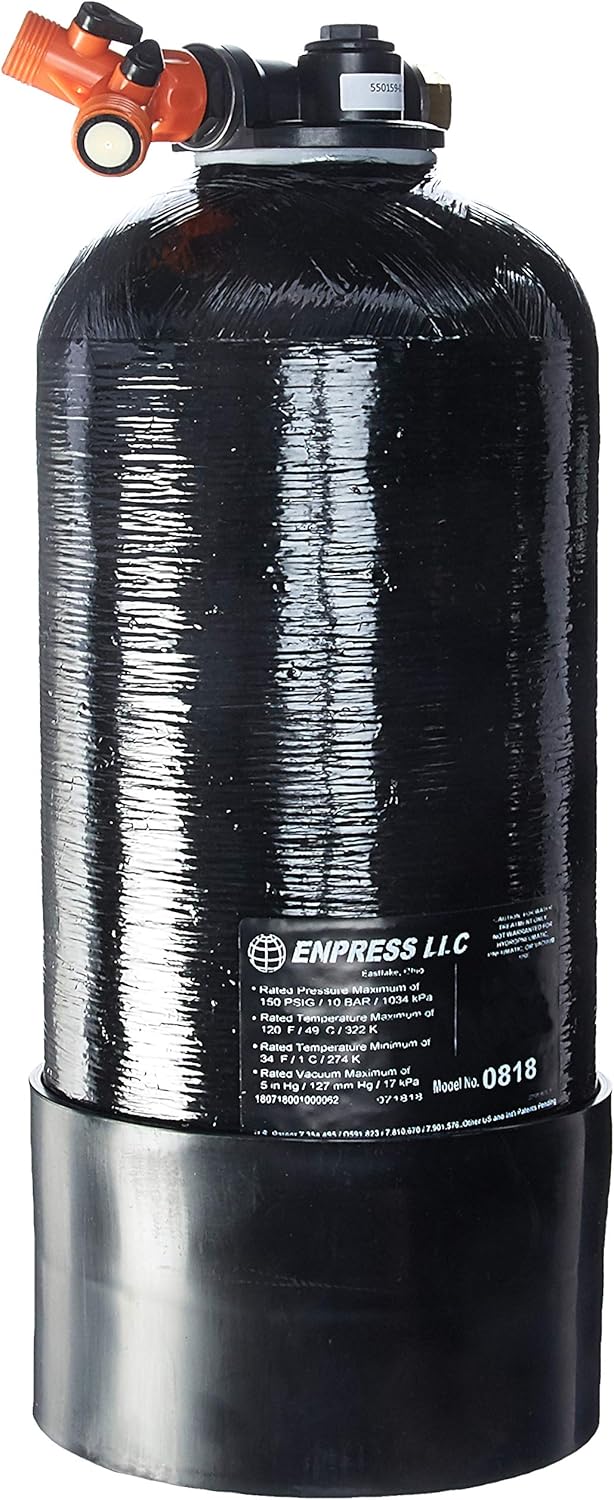
This model is an excellent mid-range option that offers great performance for its size and price. With a 10,000-grain capacity, it’s a solid choice for weekend warriors or those who don’t spend extended periods in one location. Its compact size is perfect for RVs with limited storage.
- Pros: More affordable than the high-capacity models, still provides a significant improvement in water quality.
- Cons: Requires more frequent regeneration than the 16,000-grain units, which may be a hassle for full-time RVers.
4. Mobile-Soft-Water Portable Water Softener
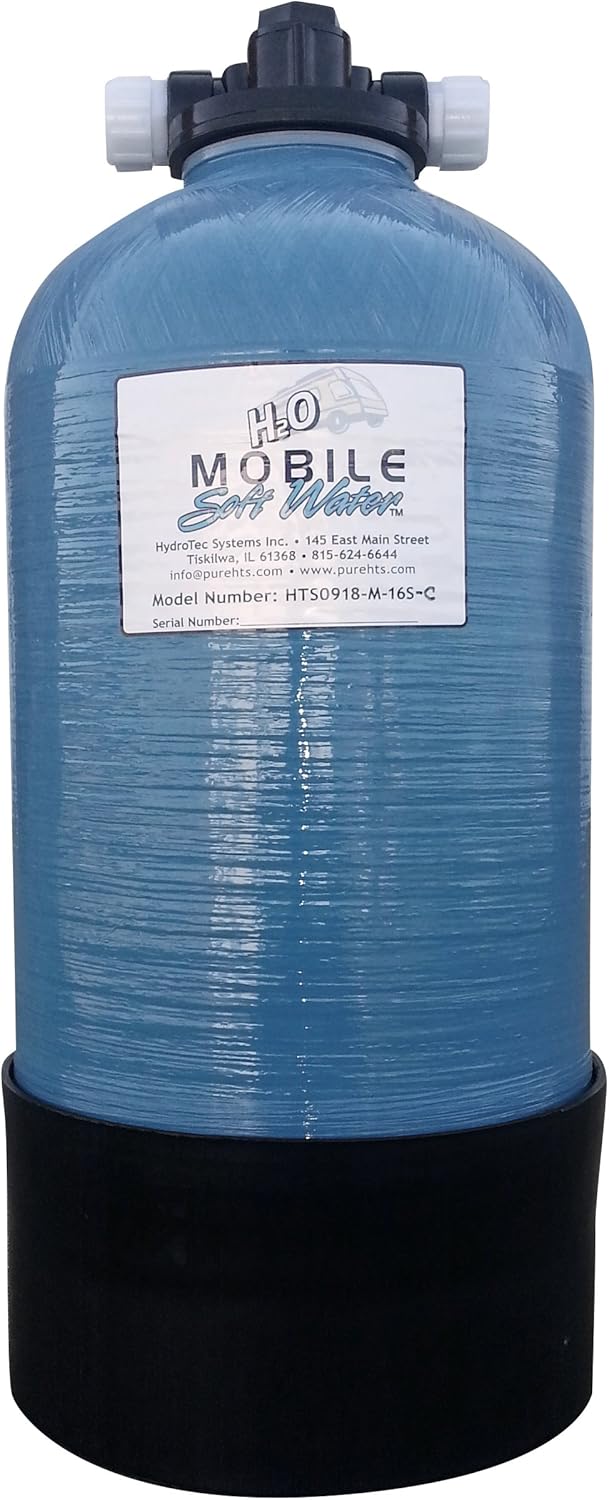
As the name suggests, this brand is all about portability. The Mobile-Soft-Water unit is a lightweight and compact option that is easy to move and set up. It offers a 10,000-grain capacity and is a good entry-level choice for those who are new to RV water softeners.
- Pros: Extremely portable and lightweight, easy to store, and very budget-friendly.
- Cons: Lower capacity means more frequent regeneration, and the build quality may not be as robust as premium brands.
5. VEVOR RV Water Softener, 16,000 Grain Portable (Model RWS16000)
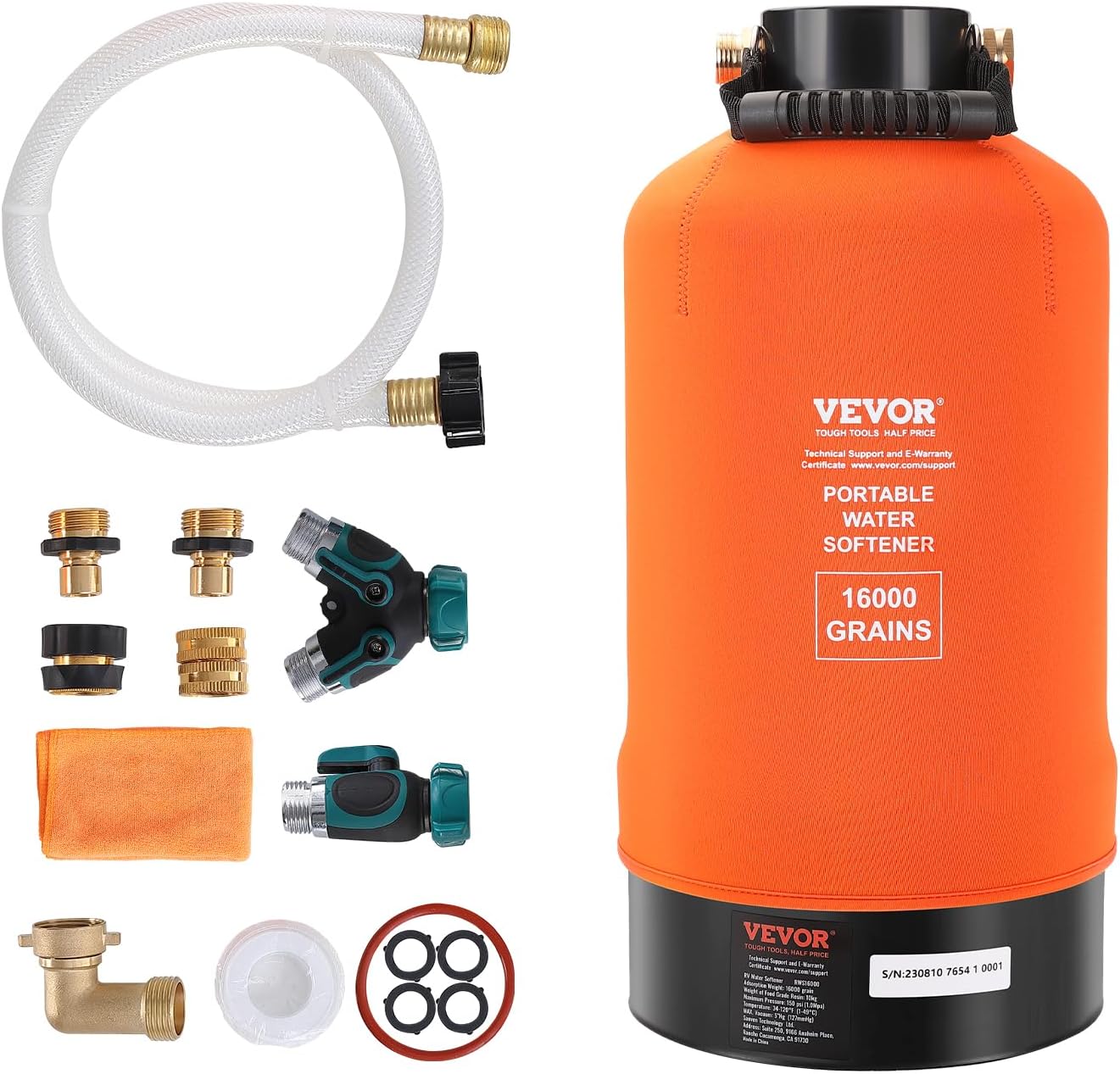
The VEVOR RV Water Softener, 16,000 Grain Portable (Model RWS16000) is a mobile water-softening unit designed for RVs, trailers, boats, pressure washers, mobile car wash setups, campsites, and similar situations. It’s made to be portable, reasonably durable, and effective at reducing the hardness of water (i.e. minerals like calcium and magnesium) that can cause scale buildup and affect appliances, plumbing, skin/hair, etc.
- Pros: With 16,000 grains capacity, it can handle quite a bit of hardened water before needing regeneration. If your incoming water hardness isn’t extremely high, you’ll get many days (or weeks) of use before adding salt.
- Cons: f your water hardness is very high (well water with very high gpg) or has a lot of sediment/dirt, the softener resin may degrade faster or clog, require more frequent regeneration, and possibly more maintenance (pre-filtering, flushing). Some users reported needing an additional sediment filter.
👉 You Might Enjoy This: Inline RV Filter Benefits for Every Journey
Conclusion
Investing in a portable RV water softener is a smart move that pays for itself in the long run. By protecting your RV’s plumbing and appliances from corrosive mineral buildup, you’ll save on repair costs and extend the life of your rig. More importantly, you’ll dramatically improve the quality of your showers, make cleaning easier, and enjoy the pure, soft feeling of clean water, no matter where your travels take you.
